
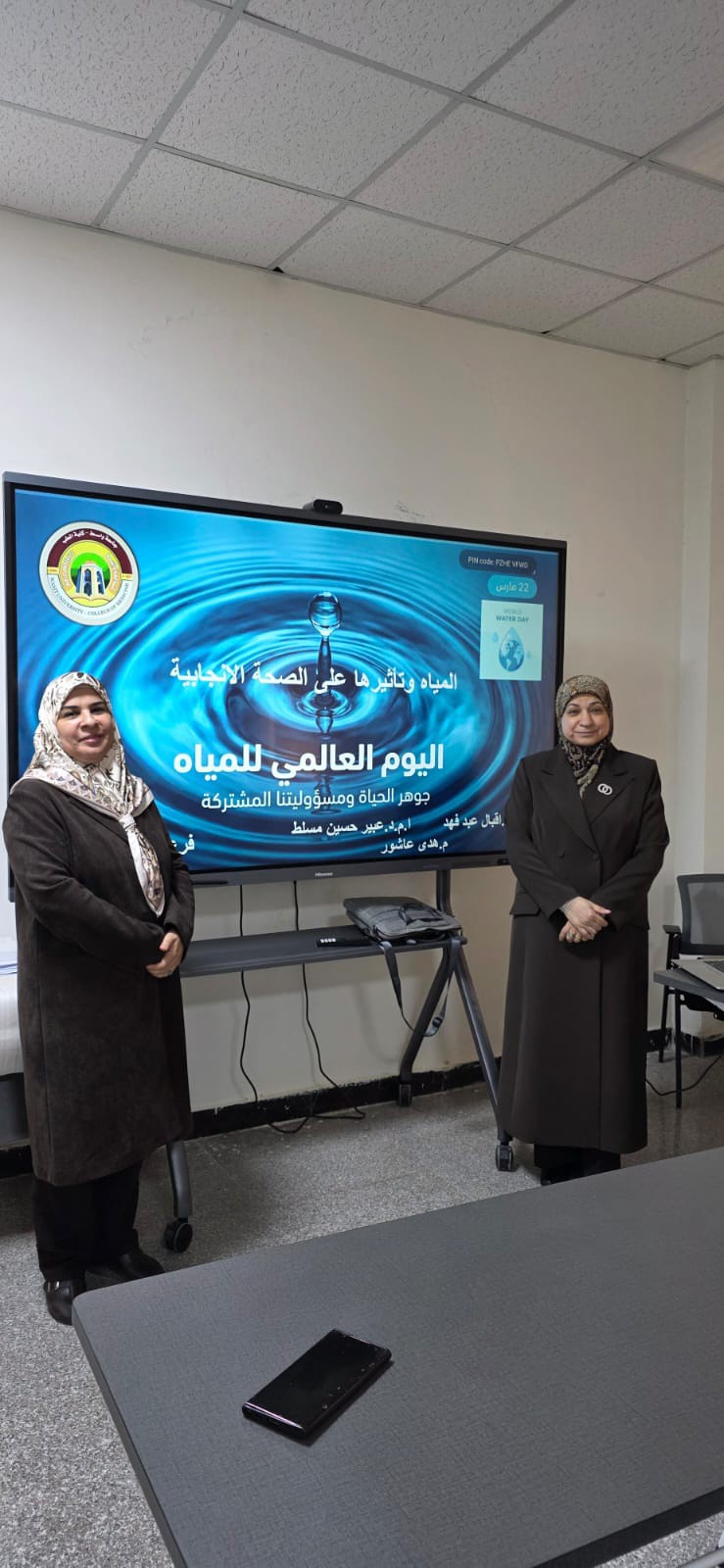
The Department of Obstetrics and Gynaecology organised a seminar on water and its impact on reproductive health
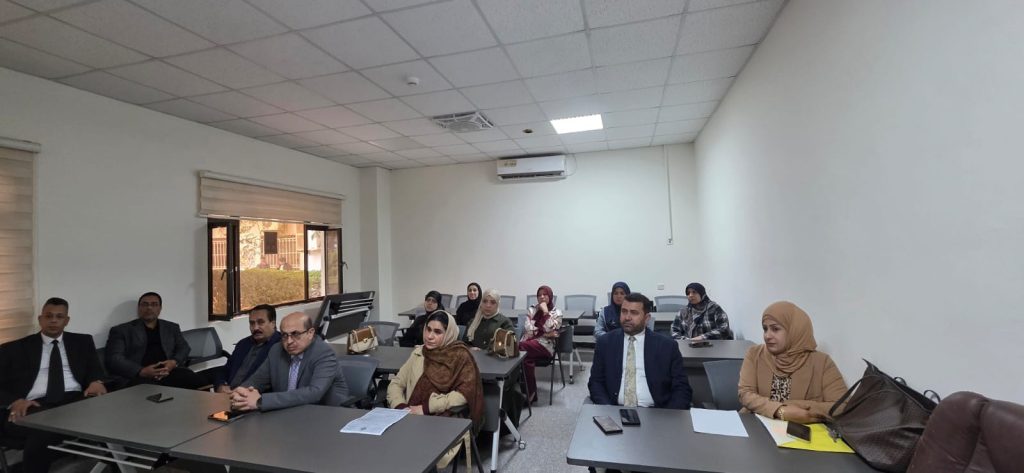
Under the patronage of the esteemed Dean of the Faculty of Medicine, Assistant Professor Dr Nasir Kazim Al-Maliki, the Department of Obstetrics and Gynaecology, in collaboration with the Women’s Affairs Unit, the Continuing Education Unit and the Sustainable Development Unit, organised a course on water and its impact on reproductive health, in pursuit of the Sustainable Development Goals and their role in building a better future. The course was delivered by the following lecturers:
Assistant Professor Dr Iqbal Abdul Fahad, Head of the Department of Obstetrics and Gynaecology
- Assistant Professor Dr Abir Hussein Maslat, Coordinator of the Department of Obstetrics and Gynaecology
- Lecturer Huda Ashour Shati, Department of Physiology and Medical Physics
The course aims to raise awareness of the role of safe water in preventing waterborne contaminants and diseases that affect fertility, women’s health, and the health of pregnant women and foetuses
The course focused on:
Identifying risks, examining water pollutants, their types and sources, which affect the food chain and consequently threaten the health of pregnant women and cause birth defects or growth disorders
Waterborne diseases and their impact on pregnant women; parasitic and bacterial diseases resulting from unsafe water
Water and personal hygiene management: personal hygiene practices during menstruation to reduce infection
Biological transformation: how water acts as a protective barrier for the foetus and shields the child from external impacts
Water and public health: the basics of safe water and its effects on the body, including hydration, skin health, hair growth and joint flexibility
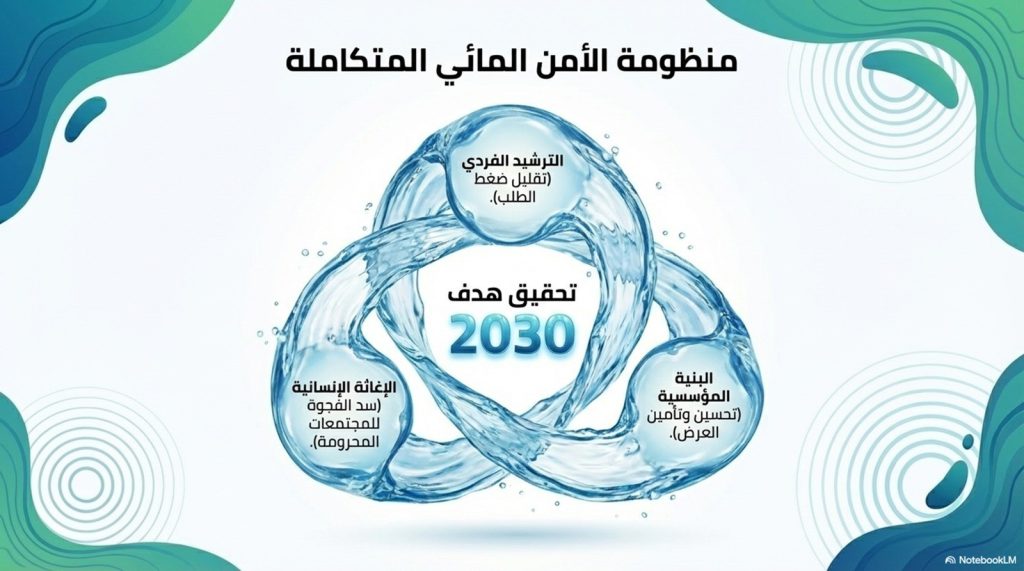
Prevention and risk reduction: proposing practical methods to reduce pregnant women’s exposure to toxic substances and pollutants
Women and girls bear the responsibility of collecting water in 80% of households where water does not reach their homes
Reducing water wastage in daily life: repairing leaks and using water-saving devices



No comment